The Leadership and Authority of the Evangelist

Introduction
The evangelist has a task assigned by God. The Scripture sheds light on this in the Gospel of John 4:31-38: Meanwhile, his disciples urged him, “Rabbi, eat something.” But he said to them, “I have food to eat that you know nothing about.” Then his disciples said to each other, “Could someone have brought him food?” “My food,” said Jesus, “is to do the will of him who sent me and to finish his work. Don’t you have a saying, ‘It’s still four months until harvest’? I tell you, open your eyes and look at the fields! They are ripe for harvest. Even now the one who reaps draws a wage and harvests a crop for eternal life, so that the sower and the reaper may be glad together. Thus the saying ‘One sows and another reaps’ is true. I sent you to reap what you have not worked for. Others have done the hard work, and you have reaped the benefits of their labor.”
Some in the body of Christ may view the evangelist negatively due to their manner of ministry, their calling, their methods, whether they bring in singers or athletes, their dress, and other such things. However, in reality, the evangelist has an authoritative calling from God. Usually, the evangelist does not have the same prestige as a pastor, a prophet, or a teacher. Nevertheless, the evangelist has a unique calling from the Lord, which is found in Ephesians 4:11: “So Christ himself gave the apostles, the prophets, the evangelists, the pastors and teachers.”
The ministry of the evangelist can be seen as the hand in the body. This ministry is surrounded by other ministries such as the pastor who cares for the sheep or the prophet who exhorts, often getting into trouble for doing so, but such is the ministry of the prophet. Finally, the apostle or missionary who plants congregations or raises up works. The evangelist has a beautiful ministry which is to proclaim the good news. The teacher disciples and teaches the Word of God. Once souls are reached, they are handed over to the pastors. The ministry of the evangelist is situated right in the middle between that of the prophet and the pastor.
One of the obstacles in evangelism mentioned three years ago at a convention of evangelists here in the United States was “Hyper-Calvinism” (if you wish, you can look up this word on Google and search more in-depth regarding the doctrine of Calvin and his theory of salvation), although Charles Swindoll eloquently puts it in a book in this way: “God sovereignly decreed that man be free to exercise moral choice, and man from the beginning has fulfilled that decree by choosing to sin. When he chooses to sin, he does not thereby countervail the sovereign will of God but fulfills it, inasmuch as the eternal decree decided not which choice the man should make but that he should be free to make it.” This speaks to the free will that God gives us, something which many do not wish to discuss.
The evangelist can give the message of salvation to a city, region, or nation. We find verses in the Bible that we can apply to this, for example in Proverbs 11:11: “Through the blessing of the upright a city is exalted, but by the mouth of the wicked it is destroyed.”
The evangelist has or can have an impact on a city, region, or sometimes even on countries. They may not always realize it or perhaps only realize it a year later.
Read on for the 10 biblical principles of the evangelist’s self-image.
Ambassador of Christ

In 2 Corinthians 5:20, it says: Therefore, we are ambassadors in the name of Christ, as if God were making his appeal through us. We implore you on behalf of Christ: be reconciled to God.
I chose this passage because it speaks of authority, dignity, and leadership, although it has its limitations. We do not rule the world (though we may have influence), so an ambassador proclaims the Word of God himself. That is, an ambassador does not create the message that his president or other authority, such as a prime minister, gives him. They send him to a country with a mission and a message. At certain times, they tell their ambassador to say such and such. In some situations, they will communicate publicly, and other times they will speak in private. I chose this text because it speaks of authority, dignity, and leadership, although it has its limitations. We do not rule the world (though we may have influence), so an ambassador proclaims the Word of God himself. That is, an ambassador does not create the message that his president or other authority, such as a prime minister, gives him. They send him to a country with a mission and a message. At certain times, they tell their ambassador to say such and such. In some situations, they will communicate publicly, and other times they will speak in private.
Fishers of Men
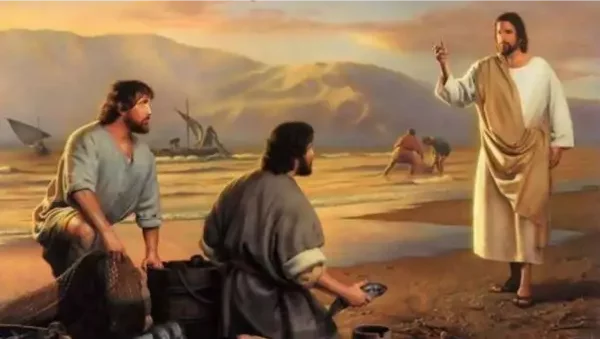
Matthew 4:19 (The Bible of the Americas). And he said to them, “Follow me, and I will make you fishers of men.”
This scripture speaks mainly of a promise from Jesus Christ, and that is what I want to emphasize. This small passage contains many points and concepts, but I want to insist on this: “Jesus Christ is saying to you in Africa, in America, in the Caribbean, in Australia, or wherever you may be:
I give you this promise that if you follow me, I will make you fishers of men.” What I see here is that a fisherman is a focused person. He is never happy sitting on the shore of the river or lake trying to fish and catching nothing. I would like to think that there are two ways to fish: one is with a fishing rod, where you put a bait or worm on your fishing rod, then you cast it into the water, hoping that a fish will bite it. You wait and wait until it is bitten; I am very impatient with this procedure. Now, the other way that I like is with net fishing, with the net you submerge it all around so that with this method you catch not one, but dozens or perhaps thousands on some occasions. Fishing has to do with a clear objective, and we must never forget it, just as we must not forget to fish one by one like the Lord Jesus did with the Samaritan woman. Applying it today could be in a restaurant while trying to establish a conversation.
I did it the other day when I went to deposit money in my bank, and now there are three believers in my bank, some who go to a congregation nearby, and others whom I would like to believe were won over by the conversations we had. Once, I bought some Starbucks coffee cards for the still non-believing employees, it was a small investment because there are about 7 or 8 employees who work in a small office, to whom I gave all the cards. You won’t believe it, but once I went to buy something in a not very crowded place and heard,
“Hey, Luis, how are you? What are you doing? What’s up?” – an open dialogue given because I bought a simple coffee card that could open doors for a conversation, and if I have time, I can stay there and continue the dialogue. So, fishers, keep one thing in mind and never forget that we have to save someone.
At the beginning of the year, I suggest you read 1 Corinthians 9:22b, where the apostle Paul says, “…I have become all things to all people, that by all means I might save some.” This is the exact translation from the Greek, that in some way I may save someone. Paul was committed to saving souls, using every means to save someone.
He says, I know not everyone will be saved. My desire is that everyone will be saved, but my commitment is to save someone. “Can we argue with him and tell him, Paul, we thought Jesus is the Savior?” Of course, He is the one who saves, but He lives in me and therefore works in me and through me.
The Evangelist is a Witness

Now, a Witness has legal connotations. A witness testifies to an experience with Jesus Christ. If you have converted (if not, you wouldn’t be an evangelist), never forget to share your testimony when evangelizing one-on-one, but also from the pulpit. I do it all the time. My conversion was not so dramatic. It was that of a little 12-year-old boy converted at a summer camp. Still, people are interested in hearing it. That’s the most intriguing thing. A witness speaks of what he has seen and heard. That’s why I say of the experience with Jesus Christ.
The witness has two characteristics. One is his integral personality or character. If you’re not honorable or beyond reproach, anything you say will be taken cynically. You won’t be listened to, or possibly, people will laugh at you. The reasons why evangelists are discredited are because some international evangelists, not many, but some of them, have made very serious mistakes, perhaps due to sin, and therefore they are now seen as clowns or are the ridicule of the world. For that same reason, you and I must have an integral personality.
The second characteristic of the witness is that he has to use words. There’s an old saying out there that’s not biblical. On the contrary, it’s anti-biblical and is attributed to St. Francis of Assisi. I bet he would reject it, which says, “Preach the gospel all the time, and when necessary, use words.” Look, if you haven’t used words, you haven’t preached the gospel. Don’t confuse things that are different. The British used to say that. Therefore, your integral personality is one thing, and your evangelization is another. Yes, you must have a noble and beyond-reproach character so that your words have authority, not only with men and women but also with the Holy Spirit. Because if you lack an integral personality, the Holy Spirit will not use it with power in the way God wants to use it. Now, when you tell your story and say, “This is what I used to be like before I met Christ, and now this is the change he brought to my life,” that’s when the apostle Peter was taken and flogged on one occasion, and they wanted him to stop speaking, but he said,
“You judge for yourselves whether it is right in God’s sight to obey you rather than God. For we cannot help speaking about what we have seen and heard” (Acts 4:19-20). So, this is what an evangelist does. The apostle Paul, at least three times, shares his testimony in Acts and in the Epistles. He uses his testimony again and again to make it his main point. So, brothers and sisters, our testimony is very important. Our experience with Jesus Christ should be very clear. Only in a fleeting moment should we tell our testimony when someone asks you,
“How did you come to know Jesus Christ?” Then you should say, “Thank you for asking.” If you have time, tell the whole story, but if time is short, abbreviate it to the maximum, but don’t forget the fundamental.”
The evangelist is also a Farmer

This image appears several times in the Bible, and in John chapter 4, we see Jesus planting seeds. All evangelists plant seeds whenever there are people in the audience, like those who are hearing the gospel for the first time, those who have heard it but have forgotten or are confused about it. Some may not convert, but you still sow the seed. Other evangelists will come later, and the person will convert. So we do both functions; we plant and harvest at the same time. Now, here are some of the characteristics of a farmer who has planted:
The first characteristic is “PATIENCE”
Everyone wants immediate results, and thank God that sometimes there are immediate results. You can see dozens and hundreds of people coming to the Lord. This is the dream of any evangelist, and it is right because the Word is being applied when it says that we will reap what others have sown. We find this scripture in John 4:35-38, which says: “Do you not say, ‘There are still four months and then comes the harvest’? Behold, I say to you, lift up your eyes and look at the fields, for they are already white for harvest! And he who reaps receives wages, and gathers fruit for eternal life, that both he who sows and he who reaps may rejoice together. For in this the saying is true: ‘One sows and another reaps.’ I sent you to reap that for which you have not labored; others have labored, and you have entered into their labor
The Second Characteristic “WAITING”
The farmer plants the seed and then has to wait for the rain and for the sun to shine. Most people don’t want to wait. Our strongest donors and supporters want immediate results. Well, God knows where the results are. I saw 500 people raising their hands and it was beautiful. How many of them became converted? Only the Holy Spirit knows, but we have to wait.
I have preached the gospel for over 50 years and lately we are getting the best testimonies. With the internet on our side, great testimonies are being shared by people I have never met or heard of before. We received one from a family in Australia who converted 14 years ago in Uruguay. I have no idea where they are and suddenly they send me a note saying they immigrated and are now living in Australia.
Therefore, you can hear these stories 30 years later. Do not despair or lose hope. You are a farmer waiting for the rain, the sunshine, and praying. You pray, look up to where the fruit comes from, and eventually it will come. Some will convert immediately and that is beautiful.
One of our team members, John, his mother had cancer and she was a lady, a true lady. She had never given her heart to the Lord. One day, we had a big campaign here in Oregon, USA and she was watching a TV program we had where people called in, there was a young girl who got pregnant outside of marriage and everything else, I led her in prayer to the Lord that day, the next day John’s mother called and told John that she prayed the same prayer as the girl and therefore she was saved. I called her and said:
- Shirley, I heard that you gave your heart to the Lord – and she said,
- Yes, I’m in, I’m the last one in, but I got eternal life.
Exactly two months later the Lord took her. It took a long time for her to convert until the last seconds of her life, but it was really a joy to tell her about salvation.
Harvesters

Now we are also harvesters. The Bible says that harvesters receive their wages and the wage of an evangelist, who is a harvester (this is actually our primary function), is the souls that are saved. An old psalm says “Give me souls for my wage”, in other words, give me souls for my salary. As evangelists, of course we want to be paid, and well paid, why not? We deserve it, but the real pay is the souls that are saved for eternal life. So, the Bible speaks of a field that is harvested for eternal life here. In John 4:36, the one who sows and the one who reaps rejoice together when they are spiritual.
Therefore, the evangelist should see himself as an Ambassador, a fisherman, a witness, a farmer, and as a “News Presenter”. I give this last one with a contemporary term. Most of these attract attention with bad news, but we give good news.
A News Anchor

In Romans 10:15, it says: “How beautiful are the feet of those who preach the gospel of peace!” Remember, when people speak ill of you and look at you with disdain, that your feet are beautiful in the eyes of the Lord and are beautiful because He says so. “How beautiful are the feet of those who preach the gospel of peace!” It is a wonderful job to be a News Presenter of Jesus Christ, where we speak of the love of God, the cross of Christ, the blood He shed, His death, resurrection, ascension, and His second coming. Let me tell you, we are finding the cure. In some cities, there are 5K runs or marathons on Sundays for cancer. We run for healing without an audience around us. We just go and proclaim the healing that comes from the cross and the blood of Christ. It is a great honor to be an evangelist and proclaim the good news. You know, the Holy Spirit is the one who gives the bad news. In John 16:8-11, it says, “And when He comes, He will convict the world concerning sin and righteousness and judgment: concerning sin because they do not believe in me; concerning righteousness, because I go to the Father, and you will see me no longer; concerning judgment, because the ruler of this world is judged.”
Sometimes the Holy Spirit uses our words or the reading of the Word to convict someone of sin. He does it without our help. The Bible doesn’t say that the Holy Spirit convicts the world of sin, judgment, and righteousness when you preach. He does it before we even get there. I have often said that one of the great things about being an evangelist is that before we get there, God is already waiting for us. Personally, I don’t like the phrase that is often used, for example, saying “God is moving in Argentina right now” or “God is moving in Australia.” Of course, He is moving, He moves everywhere, all the time. It’s not just that He moves here and there capriciously or for some strange reason. “My Father is always at his work to this very day, and I too am working,” says the Lord, and the Holy Spirit is convicting of sin. Even when a person says they are an atheist like one of those university professors, they only say it because the Holy Spirit is convicting them of sin. Therefore, go ahead and give them the good news. As News Presenters, we have to deliver good news, and the message is what counts.
A Troublemaker

In Acts 17:6b it says, “These who have turned the world upside down have come here too.” Persecution and tribulation demand perseverance. In John 8, Christ says, “If the world hates you, you know that it hated Me before it hated you.” Christ tells us not to be surprised when the world doesn’t love us because the world didn’t love Him, and not to be surprised when we are persecuted because they persecuted Him first. Christ said it; He was not unaware.
There was a preacher who had already died when I was studying at the Seminary. I was only twenty-six years old at the time, and he said that when Paul arrived in a town, the first thing he asked was, “What kind of jail do you have here, boys?” because he expected to be thrown in jail. We won’t find that in the Bible, but it’s a very interesting thought. He was sure he was going to be thrown in jail somewhere, and more than once he was. But you know what? When we pray to the Lord of the harvest and preach the gospel, some people won’t like us. In some places, they’ve killed some of ours. Not as many as they would have liked, but some have died in our days in some countries of the world. This calls us to persevere, and that is the main point here.
We are soldiers

You must see yourself as a military soldier, which speaks of authority, as mentioned in “Ambassador of Christ.” But this is a different type of authority, this is the authority to fight and go to war. It has been said that in war there is always a winner and a loser, there are no ties here.
When we go as military soldiers, we know that there is a war in a place, although we are a team. When one speaks of the military, one speaks of what some countries have as the naval force, the air force, the maritime force, the navy, and the coast guard, which are a conglomerate of people we call the military.
In the Bible, the concept of spiritual warfare and struggle are present. Some people are soft-spoken and say that we cannot speak of war. Well, they will have to browse through some pages of the Bible because it’s there, the Bible speaks that there is a spiritual war that is fought, it is real and we may be afraid of the battle because we are humans, however, we are trusting that Christ lives in us, the Almighty and Resurrected Lord Jesus, because we are soldiers, we have the authority to conquer the spiritual enemy, Satan, by winning souls and snatching them from his grasp.
One of the reasons we face opposition as evangelists is because Satan motivates carnal Christians and non-Christians who are easy to motivate to reject the call to repentance and the call to turn from eternal condemnation. They don’t like it, but it’s the truth, it’s like a doctor who has to tell his cancer patient, “I’m sorry, but if you don’t have surgery, you will die in about six months.” It’s the reality, it’s not pleasant, but it’s the truth and we have to do it.
We also inspire the Church when we lead, let me put it humbly, you as an evangelist are like a General in the Army of the Lord, you are a general and a leader, so when you come to a town in the name of the Lord, you do so with all due humility, giving God all the glory, you come with big dreams, praying big prayers and you come conquering as many as possible for the kingdom of God. We are in spiritual warfare with sin, with Satan.
The ego independent of God is called sin, the enemy of souls is an accuser, liar, and is called Satan, so we need discipline, praise, the Word of God, intercession, and prayer companions. That’s why you need to find and develop a team of intercessors who pray for you, it’s not a joke, spiritual warfare is hellish, a Filipino general said decades ago that war was hell and it is.
If you notice what happens with the aftermath of war with war veterans, it’s horrible, I have a brother who just died a month ago, he would wake up in the middle of the night screaming, it was horrible, it was hell, lately he was taking strong medicine to kill the pain, so it wasn’t all him, but he told his wife, do you hear all that noise and screaming of the Vietnamese mothers crying for their babies?
He was a poor young man who was 19 years old when he went to fight this war and was pursued 50 years later by the voices of the mothers and children who were lost in a war. War is hell, it is a battle. But we are more than conquerors through Christ Jesus who gives us the victory, it says in 1 Corinthians 15:57, “But thanks be to God, who gives us the victory through our Lord Jesus Christ.”
Team Coaches
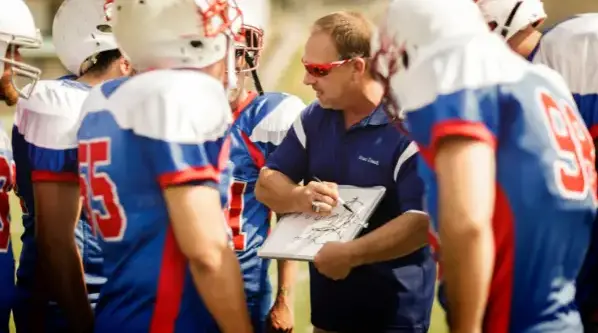
To me, this speaks of teamwork. As an evangelist, you must surround yourself with like-minded people that God brings around you; people who love and trust you. They can be men and women from the local church who share your way of thinking. That’s why I recommend having a small board of directors consisting of three to five people. We have 17 and wouldn’t mind having 30 – the more, the better, because these people have the mind of God and are people of God. When a team is formed with people who have the mind of God, the bigger the team, the better it is.
So, you become a mentor, discipling those around you, training and directing the Church of Jesus Christ on how to win souls. By the way, people are watching you when you preach the Gospel. They observe how you present the Gospel, how you progress, how you get to the topic of the cross, the resurrection, and the second coming, how you get to the topic of repentance and receiving Jesus Christ, believing in Him, etc. They are watching and learning how you do it. As the Word describes it in 2 Timothy 2:2, “And the things you have heard me say in the presence of many witnesses entrust to reliable people who will also be qualified to teach others.”
We are coaches while doing evangelism, not only by speaking it but by our actions as well. So, while we are doing it, people are learning how to preach the gospel. I have had more than one person come to me and say, “Man, I learned something from you today while you were preaching from the platform. I’m not a preacher, but now I have an idea of how to do this.” So, you are a “coach,” a “technical director,” a disciple-maker, and this is very exciting. God tells us what the message is, and we just have to work hard on it at home.
Good deeds are not the gospel; good deeds are the result of the gospel. Good deeds can also be what we do to show them that we love them. Because what unbelievers don’t understand is spiritual love. There are three kinds of love and I mention them: Eros, Filial, and Agape.
“Eros” is of course sexual, physical, emotional, and reproductive—a gift from God, but it’s physical, and unbelievers can understand that. “Filial” love is human love and love of the soul; unbelievers can also understand this love in their own way, but they cannot understand “Agape” love. Agape love is spiritual; we were created with body, soul, and spirit.
Another reason to know that we were created in three parts, not one or two only. Spiritual love is what unbelievers do not believe in. They understand good deeds, but good deeds are not the gospel. They can completely misunderstand why you are doing it. Many will think that you are doing business with your church—mocking us by taking our money and trying to be good with us—they do not appreciate what we are doing, so we have to give the gospel, and the gospel is a message.
It’s something very fulfilling, and this speaks to compassion. What moves us to evangelize is not so much that we have a gift (and we do, praise God), but that we take risks, run through danger, and are willing to give our lives if we have to. If we have to do it, we do it because we have compassion for the lost. Many people don’t understand that, even in today’s Protestant Church, there are those who don’t believe that “the lost” are truly lost. Therefore, you and I have to show by example that we believe they are lost and that’s why we believe in preaching “the Savior,” our Lord Jesus Christ.
Firefighters
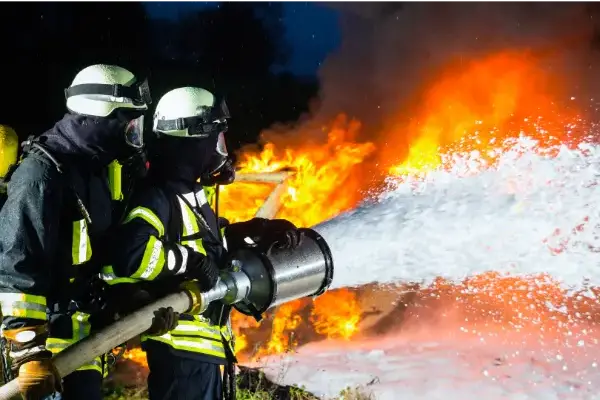
In the book of Jude, verses 22 and 23 say: “And have mercy on those who doubt; 23 save others by snatching them out of the fire; to others show mercy with fear, hating even the garment stained by the flesh.”
The key in this verse is that we snatch some out of the fire and save them. It’s a wonderful thing. We are firefighters, and everyone admires firefighters because they really put their lives in danger more than police officers in some cases, just to save others.
The interesting phrase that I love and hope you will be blessed through is: “snatching them out of the fire,” in other words, we are doing a forceful job. Sometimes when a firefighter enters a burning house, they become unconscious due to the smoke. Sometimes to save them, they have to grab them, snatch them roughly, push them out the window, or run down the stairs with them. Other times firefighters get injured in the process. “Snatching them roughly and saving them,” once again, this concept is that through Christ we are saving people.
It is something very gratifying, and it speaks about compassion. The thing that moves us to evangelize is not so much that we have a gift (and we do, praised be God), but we take risks, run through danger, and are willing to give our lives if we have to. If we have to do it, we do it because we have compassion for the lost. Many people do not understand this, even in today’s Protestant Church, there are those who do not believe that “the lost” are really lost. Therefore, you and I have to show by example that we believe they are lost and for that reason, we believe in preaching about “Savior” our Lord Jesus Christ.
We are "Priests"

I love the New International Version of Romans 15:16 which says: “to be a minister of Christ Jesus to the Gentiles. He gave me the priestly duty of proclaiming the gospel of God, so that the Gentiles might become an offering acceptable to God, sanctified by the Holy Spirit.” Isn’t that amazing? I just love that. We are priests of God assigned to proclaim the gospel of God. We have the priestly duty to proclaim the gospel of God. What a precious proclamation, brothers and sisters! Do you know what this means?
In the Old Testament, when priests were ordained, they would first put blood on their ears, thumbs, and big toes, and then put oil on top of the blood on their ears, thumbs, and big toes. The blood speaks of cleanliness and the oil of “the anointing oil,” which makes a priest, “a priest.” You and I (every believer is), but we as evangelists in particular are priests of the Almighty God to proclaim the gospel of God. If that doesn’t move you, nothing will. Just think, when you stand on a street corner or wherever you are evangelizing, you are a priest of the Almighty God.
You are not a small evangelist weasel that anyone can pay two cents to stand and act in some part of the world. No, you are a priest touched by the blood of Christ and anointed by the Spirit of Jesus Christ. In Hebrews 13:15, the New Living Translation (NLT) says, “Therefore, let us offer through Jesus a continual sacrifice of praise to God, proclaiming our allegiance to his name.” All of this to close with the fact that we are proclaimers of good news, and the good news is that the Son of God came down, was incarnated as a baby through the blessed virgin Mary (whom we remember on Christmas days), then He went to the cross.
Last night, I was listening to several hymns on the internet, and some of them touched me. I started with “There’s Room at the Cross for You,” you know, it’s a thought that touches deeply because there is always room for the unconverted to come to the cross of Jesus Christ. The other one I sang was “At the Cross, at the cross where I first saw the Light, and the burden of my heart rolled away. It was there by faith I received my sight, and now I am happy all the day.” This is a beautiful hymn, “At the Cross.” Then another one which is a prayer of a non-believer – “Don’t pass me by, don’t forget me, tender Savior” – you know there are thousands of people who think that God will never receive them because they have sinned too much. We have the privilege of telling them, “Don’t worry, the blood of Christ cleanses all sin.” Also, the famous hymn by Charles Wesley “Amazing Grace, how sweet the sound.” And finally, “Because He Lives, I Will Live Tomorrow.” The resurrection must be linked to the cross and His blood because He is alive!
Questions for Evangelist Luis Palau
Below are some of the questions that evangelists asked Luis Palau after the conference.
“Now, knowing that it takes you quite a bit of time to raise funds for events, how do you keep getting support?”
“Well, you’re not alone, believe me. Whenever young evangelists ask me this, I tell them that 50% of my time goes into fundraising. When you add up the time, you realize that you have to stay in touch with those who support you in prayer, who most of the time become donors.
Take advantage of the internet and keep them informed, as well as those who provide you with support. When you give them reports, don’t cry saying that you need shoes or that things are going badly; always give them a great vision of what God is doing. Make sure to fix small problems privately, tell them about your trips, how exciting they are, and the Lord’s triumphs. Of course, ask them to pray for you and your family, but don’t cry about needs, as it doesn’t glorify God.
Don’t ask all the time, people who love you know that you have livelihood needs, and they will provide for you. However, it is also good to remind them from time to time, especially at the end of the year, to support you. When you talk about finances, make sure to speak truthfully, no funny business”.
“As an evangelist, it can be lonely and discouraging. How did you manage to stay standing for 50 years as an evangelist?”
“In reality, there is no secret, one must persevere in what one knows, there are promises in Hebrews that say one must persevere in what one knows. One should repeat these promises to oneself and turn them into prayers to the Lord. It’s also good to have one or two friends whom you can trust and ask them to pray for you when you feel down. Don’t do it too often because these people also need encouragement themselves. To be honest, I encourage myself by encouraging others.
When I mention a Bible promise to someone, that promise speaks to me too because the Word of God speaks to us all the time. So, remind yourself of God’s promises and when you are really down, write down these inconveniences and problems on paper (that’s what I have done), then say to yourself, “What is this? Why am I discouraged? How will the Lord help me here? What do I need to do?” Then you stop thinking, stop worrying, and put this on paper (in my case, it helps) so that you can see what the real problem is. It’s okay to ask yourself why you feel so discouraged. Soon you will start saying to yourself, “I shouldn’t feel this way because the Lord has promised this, this, and that.”
Finally, valuable tools for an evangelist serving Christ. Billy Graham was once asked what his secret was to filling stadiums when he preached the Gospel. He said, “Lift up the name of Christ, exalt Him, and He will draw all men to Himself.”
“The judgment of this world is now at hand, and the prince of this world will be cast out. And if I am lifted up from the earth, I will draw all people to myself.” (John 12:21-32) Our secret must be to evangelize one-on-one or on a platform in front of thousands, lifting Him up, exalting Him and not ourselves. It is the Holy Spirit who offers repentance. Let us not distract with games or try to manipulate emotions. Let the Spirit of God do His work and not hinder His work in people or crowds. The evangelist must be a man of constant prayer and fasting. In Yonggi Cho’s book “The Prayer That Brings Revival” and Leonard Ravenhill’s “Why Revival Tarries,” they mention that prayer is the key. Ravenhill says, “What church asks its ministerial candidate how much time he spends in prayer?” Yet, a minister who does not devote two hours a day to prayer is worthless, regardless of his or her degrees.
Another very important thing that every evangelist must have is a team of workers. They must be able to listen to the advice of their team. Raise up a team that prays for you and communicates with you constantly about your work, your harvest, and your achievements in the Lord. Keep your feet on the ground and do not be swayed by flattery. Possibly, many people who said to the Lord, “Hosanna to the one who comes in the name of the Lord,” were also in that group of people who said a few days later, “Crucify him.”
The calling of an evangelist can be a very lonely life, but not necessarily so. It can be difficult for others to understand, as we see in the cases of John the Baptist, Jonah, Philip, and Jeremiah. These are callings that can be difficult for a normal person to understand. Do not be afraid to pray big prayers and have big visions. The vision has little to do with your eyes; the vision can only be seen with the eyes of the heart that God has shown you. I suggest surrounding yourself with friendships of other evangelists, people who encourage you to achieve those goals that for some may seem unattainable.